- Home
- Cashback Journal
- Is Casino Cashback Taxable? How the IRS Sees Rebates, Free Play and Comps
Is Casino Cashback Taxable? How the IRS Sees Rebates, Free Play and Comps
Checked by rewinly.com editorsUpdated Oct 27, 20267 min read
All gambling winnings are taxable, and casino perks tied to your play can count as gambling income. The IRS has no rule written specifically for loss rebates, so they are usually handled either as a reduction of your losses or as extra gambling winnings. Keep records either way.
- Reporting ruleAll gambling winnings must be reported on your return, even if no Form W-2G is issued.Source
- W-2G threshold for 2026The minimum reporting threshold for payments made in calendar year 2026 is $2,000, adjusted yearly for inflation after that.Source
- Loss deductionFrom tax years beginning after December 31, 2025, the deduction is 90% of wagering losses, and only up to wagering gains.Source
- Comps and wageringIn Libutti v. Commissioner (T.C. Memo. 1996-108) the Tax Court treated discretionary comps received incident to wagering as offsettable by gambling losses.Source
On this page · 9 sections
- The short answer: cashback is not tax-free money
- How gambling winnings are reported and when you get a W-2G
- Loss rebates: smaller loss or extra income?
- Free play, bonus credits and comps
- Why the classification can change your tax
- Worked example: one year with weekly cashback
- Record-keeping that holds up
- Frequently asked questions
- Sources
The short answer: cashback is not tax-free money
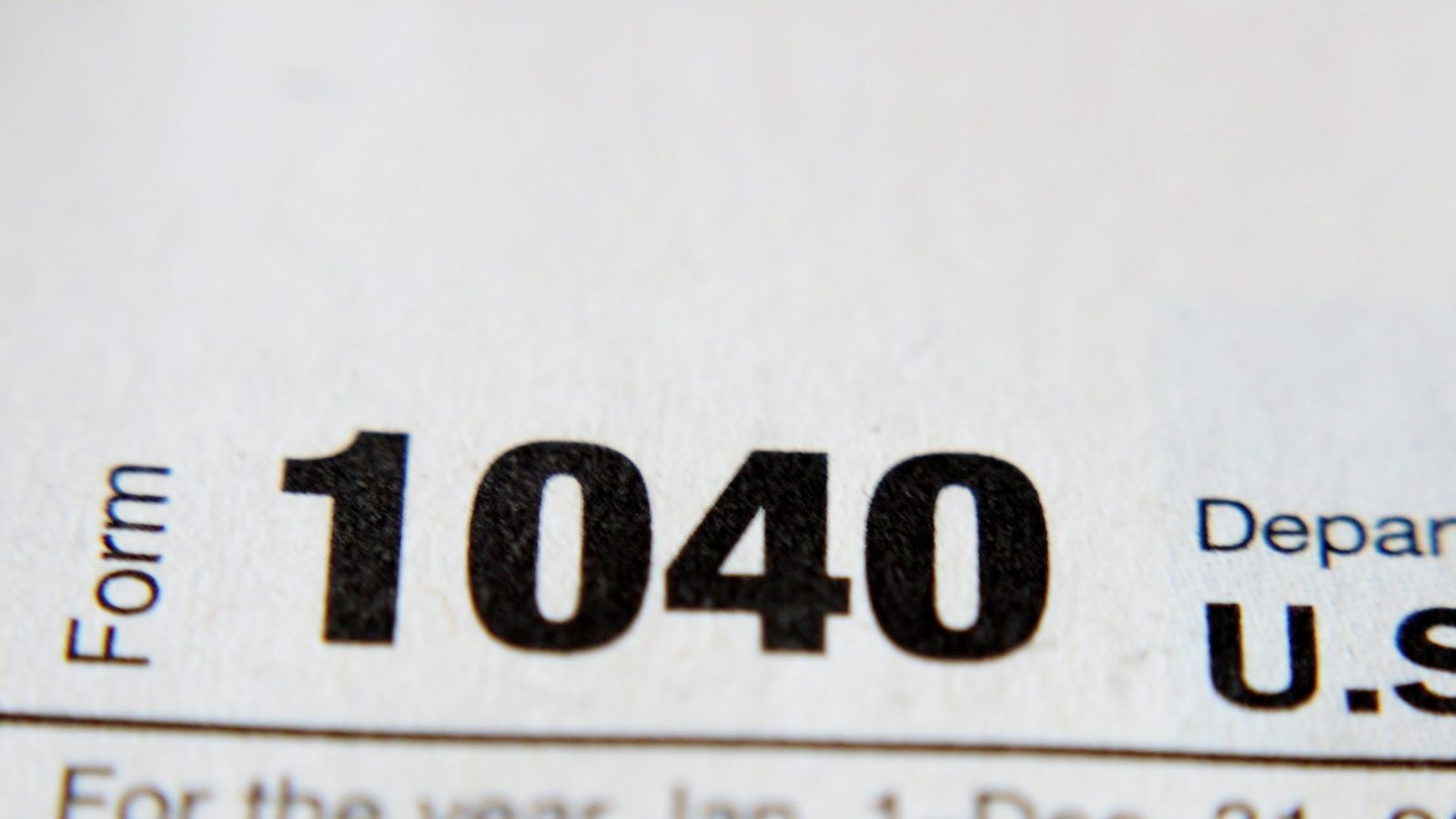
Under US federal tax law, gambling winnings are fully taxable, and the IRS says you must report all of them on Form 1040 even if the casino never sends you a Form W-2G. Cashback, loss rebates, free play and comps sit right next to those winnings, because you only get them because you wagered. That link to your play is the reason the tax answer is never simply "it is a gift, ignore it."
What the IRS has not published is a rule written specifically for casino loss rebates. There is no form line called "cashback" and no revenue ruling that says whether a 10% rebate on net losses is income or a reduction of a loss. So the practical question is not whether cashback matters for tax, but which of two reasonable approaches you use and whether you can back it up with records.
This page is general information, not tax advice. If your numbers are large, or you are close to the line between casual and professional gambling, a CPA or enrolled agent who handles gambling returns can apply the rules to your facts.
How gambling winnings are reported and when you get a W-2G
Gambling winnings go on Schedule 1 (Form 1040), line 8b, according to IRS Publication 525. Winnings include cash and the fair market value of noncash prizes such as cars and trips, as IRS Topic No. 419 puts it. Fantasy sports winnings count as gambling winnings too.
A W-2G is an information return that the payer files; it is not the test of what is taxable. For payments made in calendar year 2026, the 2026 Instructions for Forms W-2G and 5754 set the minimum reporting threshold at $2,000, and the threshold will be adjusted for inflation in later years. For slot machines that is up from the long-standing $1,200 figure. The change followed the information-reporting threshold increase in P.L. 119-21, the 2025 reconciliation act.
- Slots, bingo and keno: reportable at or above the applicable threshold; keno is measured after deducting the price of the winning wager. Regular gambling withholding does not apply to these games.
- Sports and other wagering: reportable when winnings meet the threshold and are at least 300 times the wager.
- Withholding: regular gambling withholding is 24% on certain winnings over $5,000, and backup withholding at 24% can apply if you do not give the payer a correct taxpayer identification number.
None of these thresholds changes your obligation: a $300 win that produces no form is still income.
Loss rebates: smaller loss or extra income?
A loss rebate (often marketed as cashback or lossback) returns a percentage of your net losses over a period. Two approaches are used in practice, and neither has been blessed or rejected by a published IRS rule aimed at casino rebates.
- Reduce the loss. The rebate is treated as part of the economics of the wagering it refunds. If you lost $1,000 and got $100 back, your wagering loss for that period is $900. This mirrors how the IRS measures slot play in Chief Counsel memorandum AM 2008-011: a casual gambler recognizes gain or loss when cashing out, comparing what was redeemed with what was put in. Publication 525 also says a cash rebate from a dealer or manufacturer on an item you buy is not income, though that rule is written for purchases, not wagers.
- Treat it as gambling income. The rebate is reported as an additional gambling gain, and the full losses stay on Schedule A. Support for linking casino perks to wagering comes from Libutti v. Commissioner, T.C. Memo. 1996-108, where the Tax Court allowed a high-volume player to offset discretionary comps with his gambling losses because the comps were received incident to his wagering.
The Tax Court later described Libutti in Mayo v. Commissioner, 136 T.C. 81 (2011), as an exception to the general rule that wagering gains must be the direct result of a wager, and a concurring opinion questioned it. That is why careful preparers treat the area as unsettled. Whichever approach you choose, apply it consistently from year to year and keep the statements that show how each rebate was calculated.
Free play, bonus credits and comps
Free play and bonus credits usually cannot be withdrawn as cash; they have to be wagered first. The IRS has not issued guidance on promotional credits, and the 2026 W-2G instructions do not mention them. A common approach is that the credit itself is not reported when it lands in your account, but whatever you win and cash out from it is a gambling winning, because all winnings are taxable. Your cost basis in a free-play wager is zero, so a $50 free-play spin that pays $80 adds $80, not $30, to your gains for that session.
Comps are noncash: rooms, meals, show tickets, sometimes merchandise. Topic No. 419 says winnings include the fair market value of prizes. In Libutti the comps were large and discretionary, the casino issued information returns, and the taxpayer reported them and offset them with losses. Small routine comps such as a meal voucher are rarely reported by casinos, but the same logic applies in principle: value received because you gambled is linked to your gambling.
Loyalty points that convert into cash or free play are treated the same way in practice: the moment they become cash you can withdraw, or produce winnings you cash out, they show up in your gambling records.
Why the classification can change your tax
For many people the two approaches give the same taxable result, because losses are deductible only up to gains. They diverge when you take the standard deduction, because gambling losses are an itemized deduction on Schedule A. A casual gambler who does not itemize cannot deduct any losses, as AM 2008-011 notes, so every dollar classified as a winning is fully taxed.
| Item (Example) | Approach A: rebate reduces losses | Approach B: rebate is a gambling gain |
|---|---|---|
| Session gains | $10,000 | $10,500 |
| Session losses | $11,500 | $12,000 |
| Deductible losses if you itemize (2026 rule: 90% of losses, capped at gains) | min(0.9 × $11,500, $10,000) = $10,000 | min(0.9 × $12,000, $10,500) = $10,500 |
| Net taxable gambling income, itemizer | $0 | $0 |
| Gambling income added to AGI, standard deduction | $10,000 | $10,500 |
The table assumes $10,000 of winning sessions, $12,000 of losing sessions and a $500 rebate. Gains also raise adjusted gross income even when losses offset them later on Schedule A, and AM 2008-011 points out that a higher AGI can reduce other tax benefits, such as the exclusion of Social Security payments. Approach B pushes AGI up by the full rebate.
Worked example: one year with weekly cashback
Example. Suppose you play online slots in a legal state and track results by session, the way AM 2008-011 describes: each session's gain or loss is what you cash out minus what you put in. Over the year you have 40 sessions. Twelve end with a gain totaling $6,400. Twenty-eight end with a loss totaling $9,800. The casino pays a 10% weekly rebate on net losses, and the rebates for the year add up to $340, credited as withdrawable cash.
- Gross gambling gains under Approach A: $6,400. Losses: $9,800 − $340 = $9,460.
- Itemizer, 2026 rule: 90% of $9,460 = $8,514, capped at gains of $6,400. Deduction: $6,400. Net: $0.
- Gross gains under Approach B: $6,400 + $340 = $6,740. Losses: $9,800. 90% = $8,820, capped at $6,740. Net: $0.
- Standard deduction filer: $6,400 (A) or $6,740 (B) of fully taxable gambling income.
In both cases your real economic result was a loss of $9,800 − $6,400 − $340 = $3,060. The rebate shrank that loss, but it did not turn the year into a tax-free one if you do not itemize. If your losses had been close to your gains, the 90% limit would leave part of your winnings taxable; that is covered in our article on the 90% loss deduction rule.
Record-keeping that holds up
Topic No. 419 says you need an accurate diary or similar record of winnings and losses, plus receipts, tickets or statements. Publication 529 repeats the diary requirement and says you cannot deduct losses greater than your winnings. For online play, the account history the operator gives you is a strong starting point, but download it during the year; accounts can close.
- Date, game type, operator and location (or app) for each session.
- Amount put in and amount cashed out per session, which gives the session result.
- Every cashback or rebate credit: date, amount, the period it covered and the formula stated in the terms.
- Free-play credits received and the cash you withdrew after playing them.
- All Forms W-2G and any 1099 forms the operator issues.
If you take rebates in crypto, also record the dollar value at the moment each credit arrives; the tax rules for that are in our article on crypto cashback and price swings. To see how a rebate percentage translates into dollars before you play, the casino cashback overview walks through the formulas.
One more point: a rebate never changes the house edge into a profit. If tracking losses starts to feel like chasing them, set a deposit limit or use self-exclusion with your operator, and call or text 1-800-MY-RESET for free, confidential help.
Frequently asked questions
Do I have to report casino cashback if I did not get a Form W-2G?
Yes, in the sense that the IRS requires you to report all gambling winnings whether or not a W-2G is issued. How the rebate shows up, as lower losses or as extra winnings, depends on the approach you use consistently.
Is free play taxable when it is credited to my account?
The IRS has not issued guidance on promotional credits. A common approach is to report nothing when the credit arrives and to treat whatever you win and cash out from it as gambling winnings.
Can I deduct gambling losses if I take the standard deduction?
No. Gambling losses are an itemized deduction on Schedule A, so without itemizing you report winnings and get no deduction for losses.
What is the W-2G threshold for slot machines in 2026?
The 2026 W-2G instructions set the minimum reporting threshold for payments made in calendar year 2026 at $2,000, up from $1,200 for slots, with inflation adjustments in later years.
Sources
- IRS Topic No. 419, Gambling income and losses
- IRS Instructions for Forms W-2G and 5754 (Rev. January 2026)
- IRS Instructions for Forms W-2G and 5754, PDF
- IRS Publication 525, Taxable and Nontaxable Income
- IRS Publication 529, Miscellaneous Deductions
- IRS Chief Counsel memorandum AM 2008-011, Reporting of Wagering Gains and Losses
- IRS Chief Counsel memorandum 202111012 (discusses Mayo v. Commissioner)
- 26 U.S. Code 165, Losses (Cornell LII)
- Taxation of gambling: rakeback and casino comps (Libutti, Mayo)
- Holland and Knight: W-2G reporting threshold for slot machine winnings raised to $2,000
21+ only. Cashback reduces losses; it does not turn a losing game into a winning one. Set a deposit limit before you claim any rebate. Gambling problem? Call or text 1-800-MY-RESET — free, confidential, 24/7.
Read next


21+#ad · We may earn a commission from offer links; it never changes the order of terms shown.Offshore sites are not licensed by US states.Gambling problem? Call or text 1-800-MY-RESET.